


Reading time: 5 min | Category: Health & Well-being
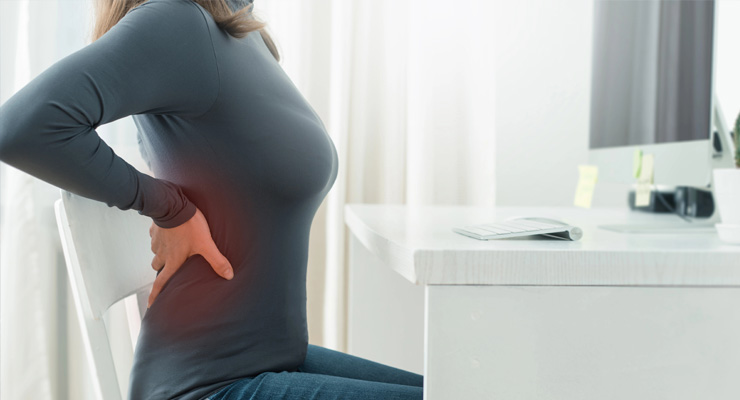
Back pain is one of the most common health issues in the world. In France, nearly 80 % of the population experiences it at some point in their life. Lower back pain, neck tension, herniated discs, spinal arthritis — the causes are varied, but the solution is often the same: strengthen the deep muscles that support the spine.
This is exactly what Pilates does. And it's why this method is now recommended by many physiotherapists and doctors as a therapeutic complement to standard back pain treatments.
The back is a complex structure — vertebrae, intervertebral discs, ligaments, deep and superficial muscles — that supports the entire weight of the body and absorbs the strains of everyday life.
The most common causes of back pain:
Strengthening the deep core muscles
Pilates primarily targets the deep stabilizing muscles — the transverse abdominis, the multifidus, and the pelvic floor — which form a natural belt around the spine. By strengthening these muscles, the pressure on the intervertebral discs and spinal joints is mechanically reduced.
The result: less pain, better stability, and a spine better protected during everyday movements.
Correcting posture at a deeper level
Pilates doesn't just relieve pain — it addresses its cause. By retraining posture, it corrects the imbalances that lead to chronic pain. The focus on alignment, central to the method, retrains the body to hold itself correctly without conscious effort.
After a few weeks of regular practice, posture improves naturally — sitting, standing, and in motion.
Decompressing the spine
The stretching and lengthening exercises in Pilates create space between the vertebrae, relieving pressure on the intervertebral discs. This is particularly beneficial for people with herniated discs or lumbar arthritis.
The Reformer is especially effective in this context: its spring system allows for gentle, controlled traction on the spine that's impossible to achieve on the mat.
Working on breathing to release tension
Breathing is at the heart of the Pilates method. Deep, controlled breathing oxygenates the muscles, releases tension and activates the parasympathetic nervous system — the one responsible for relaxation. For people whose back pain is worsened by stress, this aspect of the method is especially valuable.
Improving mobility and flexibility
A painful back is often a stiff back. Pilates works the spine's range of motion in every direction — flexion, extension, rotation, lateral bending — gently and without forcing. Restored mobility reduces pain and prevents stiffness from setting in.
The Reformer plays a central role in back rehabilitation through Pilates. Its unique design allows for partial unloading of the body — reducing the effect of gravity on the spine — enabling exercises that would be impossible to perform standing or sitting for people in acute pain.
What the Reformer specifically offers for the back:
Cathy D'Agop regularly works with clients presenting diagnosed back conditions:
Each programme is adapted to medical prescriptions and the person's real limitations. Cathy doesn't replace a doctor or physiotherapist — she complements and extends their work.
Results vary depending on the person and the nature of the pain. As a general guide:
Consistency is key. Two sessions a week give the best results over the long term.
Back pain isn't something you have to live with. In most cases, regular work on the deep muscles, posture and mobility can significantly reduce pain and lastingly improve quality of life.
Pilates, practised with a qualified coach, is one of the safest and most effective approaches to achieve this — at any age, regardless of your starting level.
Do you suffer from back pain and want to explore Pilates in Monaco? Contact Cathy for a first, no-obligation conversation.