


Reading time: 5 min | Category: Mobility & Recovery
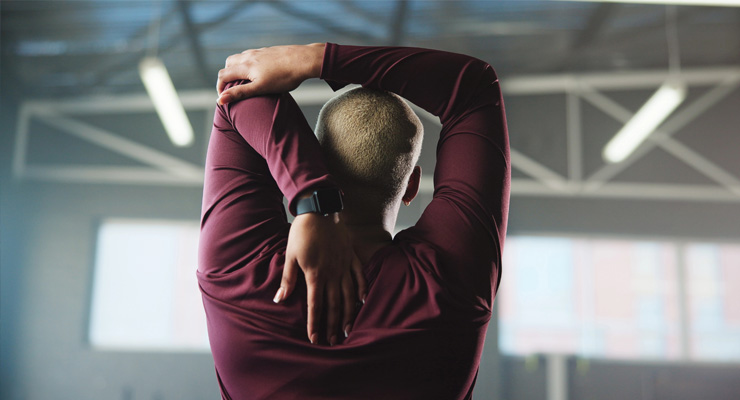
Stretching is often the most overlooked part of exercise. It gets rushed at the end of a session, skipped when time is short, and treated as an afterthought compared to the main workout. That's a mistake.
A body that doesn't stretch is a body that stiffens, gets injured more easily, and ages faster. By contrast, regular stretching improves mobility, speeds up recovery, prevents injuries and contributes to deep overall well-being — both physical and mental.
Stretching covers a range of techniques for muscle and joint flexibility, aimed at improving suppleness, mobility and recovery. There are several types, each with different goals and ideal moments for use.
Static stretching
The best-known form. You move into a stretch position and hold it for 20 to 60 seconds, without bouncing. Ideal at the end of a session or during a dedicated recovery session — never as a warm-up.
Dynamic stretching
Slow, controlled movements that gradually take the joints through their full range of motion — rotations, swings, circles. Perfect at the start of a session to prepare the muscles and joints for effort without cooling them down.
Postural stretching
A holistic approach combining stretching, breathing and body awareness to correct postural imbalances. This is the approach at the heart of the Pilates method — every exercise includes an element of lengthening and alignment.
Foam Roller stretching — myofascial self-massage
The Foam Roller releases the fascia — the connective tissue surrounding the muscles — by applying gradual pressure to tight areas. It's a particularly effective active recovery technique for the legs, back and shoulders.
Improving flexibility and joint mobility
Regularly stretched muscles keep their elasticity, joints retain their range of motion, and the body moves more easily through everyday movements. This preserved mobility becomes especially valuable with age, as joint stiffness tends to set in gradually.
Preventing injuries
A stiff muscle is a fragile muscle. It copes less well with sudden strain — awkward movements, impacts, unexpected efforts — and tears more easily. Regular stretching increases the tolerance of muscles and tendons to effort and significantly reduces the risk of muscle injuries.
Speeding up recovery after exercise
After an intense session, muscles are tight and full of lactic acid and metabolic waste. Stretching helps clear this waste by improving blood and lymphatic circulation, reducing soreness and speeding up the return to normal.
Relieving chronic pain
Chronic muscle tension — in the neck, shoulders, lower back, hips — is often linked to gradual muscle shortening, made worse by a sedentary lifestyle and stress. Targeted, regular stretching releases this tension, relieves pain and improves everyday quality of life.
Reducing stress and improving mental well-being
Stretching activates the parasympathetic nervous system — the one responsible for rest and recovery. A session of deep stretching, combined with slow, controlled breathing, produces a powerful relaxing effect, comparable to active meditation.
Maintaining good posture
Tight chest muscles pull the shoulders forward. Tight hip flexors tilt the pelvis and arch the lower back. Stiff hamstrings pull on the pelvis and contribute to lower back pain. Regularly stretching these key areas naturally corrects posture and prevents related pain.
Some areas accumulate more tension than others, particularly for people who are sedentary or sit for long periods:
Pilates naturally incorporates stretching into every session. Each exercise combines strengthening and lengthening at the same time — making it a particularly complete method for building both strength and flexibility, without the need for separate sessions.
The Reformer is particularly effective for gentle traction stretching — it allows the spine to lengthen, the hips to open, and the posterior muscle chains to stretch with a precision and safety that's impossible to achieve on the mat.
Cathy systematically includes a phase of targeted stretching in her coaching sessions in Monaco — adapted to each client's specific tension areas and current goals.
You don't need to spend an hour stretching to feel the benefits. A 10 to 15 minute routine, practised regularly and with intention, produces visible results within a few weeks.
For a significant improvement in mobility and a lasting reduction in pain, two to three deeper stretching sessions per week are recommended — ideally built into Pilates or personal coaching sessions.
Stretching isn't a luxury or an afterthought — it's an essential part of a smart approach to exercise and a body that ages well. Flexibility, mobility, recovery, posture, mental well-being — its benefits touch every aspect of physical and psychological health.
Would you like to improve your flexibility and mobility with personalized support in Monaco? Contact Cathy for a first, no-obligation conversation.